Super Billiards Real 8 Ball
- 4.9
- Rating
- 5.00M
- Installs
- Free
- Price
 Analysis by App-foxy
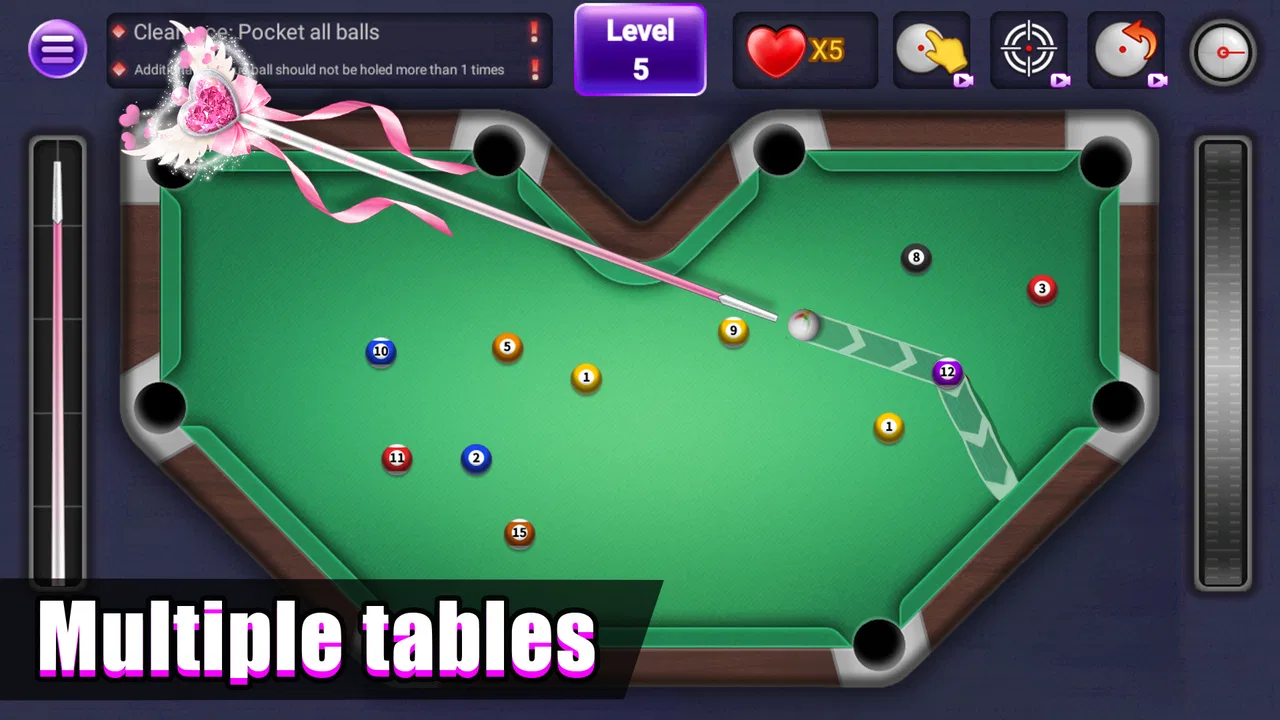
I approached Super Billiards Real 8 Ball as a casual pool game rather than a replacement for a full simulation. That distinction matters from the first shot. It is built around the familiar appeal of eight-ball billiards: line up the cue, judge the angle, control the strength, and try to clear your group before finishing with the eight ball. The presentation is easy to understand, but the better shots still demand patience.
As a free sports game from EWG STUDIO, it is aimed at people who want to play a few rounds without learning a complicated control system first. I found the basic idea approachable enough for a first-time player, while the table still gives experienced pool players room to notice small mistakes. The store summary calls it a way to elevate your game and conquer all, but my more practical description would be simpler: it is a convenient digital pool table for short sessions, practice, and friendly competition with yourself.
What to expect before your first break
The important thing to understand is that success comes less from rushing and more from reading the table. A powerful shot is not automatically a good shot. If the cue ball finishes in a poor position, the next turn becomes harder even when the target ball drops. I quickly started thinking about the shot after the shot, especially when several balls were close to a cushion.
You May Also Like

 Google Keep - Notes and lists
Google Keep’s Quiet Growth Shows the Appeal of Simpler Notes
As mobile work gets busier, Google Keep keeps winning a simple contest: capture a thought quickly, find it later, and get on with the day.

 Blood Strike: 2.5 Anniversary
Blood Strike’s Loadouts Turn Every Drop Into a Tactical Gamble
A close look at Blood Strike’s custom loadouts: how fast access to signature weapons reshapes its battle royale rhythm, rewards preparation, and narrows the gap between fights.

 Pandora - Music & Podcasts
Pandora’s Music Is Easy to Start, but Harder to Recover
Pandora’s strength is its low-effort path from a seed to a station. Its weak spot is how much confidence it asks you to place in connection, setup, and quiet recovery.

 8 Ball Pool
 Is Built on Rivalries, Rematches, and Routine
A close look at the rivalries, rematches, shared routines, and unanswered safety questions that turn a quick pool match into a persistent mobile community.

 Samsung Music
’s Quiet Strength Is Playing What You Already Own
Its reach comes less from spectacle than from dependable access to a personal library. That simplicity is both the app’s strongest retention engine and its ceiling.

 AccuWeather: Weather Radar
AccuWeather Review: A Quick, Clear Forecast for Everyday Decisions
For everyday plans, the best forecast is the one you can understand quickly. AccuWeather makes rain timing, radar, and local conditions easy to act on, with a few trade-offs.
More From Our News Desk



The game belongs in the sports game category, but it is also a fairly relaxed time-filler. You can open it when you have only a few minutes, yet a difficult table can keep your attention longer than expected. That makes it suitable for a commute, a short break, or a quiet evening when you want something interactive without the commitment of a large action game.
The audience is broad. Its content rating is Everyone, and the minimum operating-system requirement is Android 6.0, so it is not restricted to only recent devices. It is free to install, although optional in-app purchases range from $0.99 to $74.99 per item. I would treat those purchases as something to consider carefully rather than part of the basic reason to try the game.
The public response is strong, with a 4.9 average from around 18 thousand ratings and more than 5 million installs. Those figures suggest that the simple pool format is connecting with a large audience, but they should not replace your own test. Pool games are especially personal: one player may enjoy a forgiving, quick interface, while another may want detailed physics, tournament depth, or a more serious training environment.
The feel of a short session
My favorite use case is a focused ten-minute session. Instead of opening the game with the vague goal of “playing well,” I choose one small target: make a clean opening, avoid scratching, or leave the cue ball in a useful position. That turns a casual match into practice. It also makes improvement easier to notice because I am judging decisions, not only whether the final ball disappears.
The game works best when you accept that some turns will be about safety rather than spectacular pots. If the obvious shot leaves the cue ball trapped near a rail, a softer alternative may be smarter. This is one of the less obvious lessons for newcomers: the most satisfying shot is not always the most useful shot.
What the developer’s design gets right
EWG STUDIO keeps the central activity recognizable. You do not need to understand a long list of sport-specific menus before taking a turn. That clarity is valuable on a phone, where overly dense controls can make a simple game feel like work. I also appreciate that the concept is immediately readable: the table, the balls, the cue, and the target are the focus.
The trade-off is that a streamlined pool game may feel limited to players who expect a complete billiards package. If your priority is a deep career structure, extensive customization, or the exact behavior of a dedicated desktop simulator, this is probably not the first option I would suggest. I would choose it for accessibility and quick play, not for the most demanding interpretation of the sport.
From installation to a meaningful first win
I found that the quickest route to a satisfying first win is to make the table feel readable before trying to play aggressively. I focus on one clear target, use a controlled stroke, and check where the cue ball is likely to stop; that turns a lucky pot into a decision I can repeat. The next section looks at the small aiming and power habits that make that first success easier to understand.
Start by learning the controls, not chasing the eight ball
After installing the game, I recommend spending the first turn understanding how aiming and power respond to your touch. Do not worry about clearing the table immediately. First, make a gentle shot and watch how far the cue ball travels. Then try a stronger stroke and compare the result. This small experiment gives you a personal sense of control, which is more useful than blindly copying a power level.
Before confirming a shot, pause long enough to inspect three things: the path of the target ball, the likely resting place of the cue ball, and any ball that could block the next attempt. Beginners often look only at the object ball. In eight-ball, that is how a successful pot can still create a bad turn.
A practical first-session routine is to choose the easiest visible target rather than the most valuable-looking one. If two balls are available, pick the one with the clearest route to a pocket and use the stroke to keep the cue ball near the center of the table. Center-table position gives you more options afterward and reduces the chance that the next shot becomes an awkward rail attempt.
Your first successful action should be repeatable
For a first meaningful success, I would not define victory as winning a whole match. I would define it as making one controlled pot while leaving the cue ball in a sensible place. That is a repeatable skill. Once you can do it several times, you are building a real foundation instead of relying on one lucky angle.
Use a light touch when the target ball is already close to a pocket. New players often add too much force because a harder shot feels safer. In practice, excess power can send the cue ball across the table, create an accidental collision, or make position unpredictable. A calm stroke is usually easier to evaluate after the shot.
When the target is farther away, think in terms of alignment rather than speed. Line up the cue with the intended contact point, then choose enough power to reach the pocket without turning the table into a chain reaction. If the game gives you an aiming guide, use it as a reference rather than assuming it removes the need for judgment. Guides can help with direction, but they do not replace choosing a sensible leave.
How I avoid the first common mistake
The most common early confusion is treating the aim line as the entire decision. It is only the beginning. A shot can appear perfectly aligned and still be poor because the cue ball ends behind another ball or near a cushion. I now take a second look at the cue ball’s expected route before committing.
Another mistake is changing the aim repeatedly without a clear reason. Small adjustments can be useful, but constant dragging often makes players lose the original line. I prefer to set the general direction, check the target pocket, make one careful correction, and then adjust power. This keeps the process understandable and makes missed shots easier to learn from.
Players also sometimes assume that every turn should attack. That is not always true. If a direct pot is risky and another ball offers a safer route, a defensive choice can preserve control. Even in a casual phone game, recognizing when not to force a shot is a major step forward.
What to do when a shot goes wrong
A miss is useful if you identify the cause. Was the angle wrong, or was the power too high? Did the cue ball contact another ball first? Did the target reach the pocket but fail to enter because the approach was too shallow? Separating those possibilities helps you improve faster than simply trying the same shot again with more force.
If the cue ball ends near a cushion, slow down on the next turn. Rail shots can be tempting because they look dramatic, but they leave less room for error. I would first search for a simple open-table option. If none exists, use the cushion as a reference and favor control over distance.
Understanding optional spending
Because the game is free, a new player may wonder whether spending is necessary to enjoy it. My advice is to play enough basic rounds to decide whether the core table experience suits you before considering any purchase. The listed purchase range is wide, from $0.99 to $74.99 per item, so it is sensible to treat every transaction as optional and deliberate.
For parents, the Everyone rating makes the game broadly accessible, but purchase decisions still deserve attention on a shared device. I would use the game’s free starting point to evaluate the controls and pacing first. If the basic experience does not feel comfortable, paying more will not fix a mismatch between your expectations and the game’s style.
Where new players tend to get confused
When a shot looks lined up but still goes wrong, the confusing part is often the difference between aiming at a ball and planning the cue ball’s route afterward. I find it helps to change only one thing on the next attempt, so I can tell whether the issue was direction or force. The following section separates those common mix-ups and offers a calmer way to read a difficult table.
Aiming is not the same as positioning
The easiest way to understand pool strategy is to separate the current ball from the next ball. The current ball is the one you are trying to pocket. Positioning is where the cue ball finishes afterward. A beginner who focuses only on the first task may make progress for one shot and then lose all options. I found that even a modest improvement in cue-ball placement made the whole table feel less random.
Try to avoid leaving the cue ball directly behind a cluster. If the table offers a simple shot that keeps the cue ball in open space, it may be preferable to a more ambitious pot. Open space gives you time to reassess, while a crowded area forces you into narrow angles and accidental contacts.
Power can hide an aiming problem
When a ball misses, increasing power is an understandable reaction, but it often masks the real issue. If the target is entering the pocket from the wrong angle, a harder stroke only makes the miss faster. I recommend changing one variable at a time: first correct the line, then adjust the strength. This is especially helpful on a touchscreen because it prevents random swiping from replacing deliberate play.
There is also a useful rhythm to developing consistency. Aim, check the cue-ball leave, choose power, and commit. Taking the same steps before every important shot creates a routine that survives pressure. It also makes the game less frustrating because you know why a shot failed.
Winning is not the only measure of progress
Some matches will be decided by one difficult position, and that can make a loss feel harsher than it deserves. I judge a session by smaller improvements: fewer rushed shots, better opening control, and more attempts that leave a playable next ball. This approach is particularly useful for first-time players because it keeps the learning curve manageable.
Experienced pool players may notice a different kind of limitation. A mobile game can make quick access its strength, but quick access may come with less depth than a specialized billiards simulator. If you want to study advanced cue-ball routes or reproduce tournament-style practice, a more technical alternative may serve you better. If you want a clean, portable way to rehearse basic decisions, this game is more convincing.
Who should choose another kind of game
I would skip this title if your main goal is a realistic long-form sports career with extensive progression systems. I would also look elsewhere if you dislike touch controls or want a game that teaches formal billiards technique in a structured lesson format. The straightforward design is a benefit for casual players, but it may feel too light for someone searching for a comprehensive training tool.
On the other hand, it is a good match for someone who wants to learn the logic of eight-ball gradually. You can begin with easy targets, pay attention to cue-ball placement, and build confidence without needing to memorize complicated rules before playing. That makes it a friendlier starting point than a highly technical simulator.
Taking the next step after your first success
After a first good result, I would build on it with a modest challenge rather than immediately chasing harder shots: try to leave the cue ball in open space and keep a likely next target in mind. That makes progress easier to recognize even when a match does not go perfectly. The next section turns that approach into a practical routine for improving without making casual play feel like homework.
Turn one good shot into a personal routine
Once you can make a controlled pot, add one new goal: plan two shots ahead. Before taking your current turn, identify the likely next target and ask whether the cue ball can reach a useful area for it. You do not need a perfect route. Even choosing between an open side and a crowded side is meaningful progress.
Next, practice restraint. Try to win a turn without using maximum power unless the table genuinely requires distance. This teaches you how much control the game’s touch input gives you. It also reduces scratches and accidental collisions, two problems that often come from treating every shot as a test of strength.
A third useful exercise is to play a round while judging only decision quality. Ignore whether every ball drops. After each turn, ask whether the chosen shot was the safest realistic option and whether the cue ball ended somewhere helpful. This is a better way to build skill than repeating only easy pots.
How it fits beside familiar alternatives
Compared with a physical pool table, this game is always available and removes the need for another person, a dedicated room, or a full setup. Compared with a highly detailed billiards simulator, it is easier to approach but may not satisfy players who want every technical layer represented. Its strongest position is between those two extremes: more interactive than watching pool, less demanding than mastering a specialist simulation.
That middle ground is why I can recommend it to casual players. It gives you a recognizable sport, a reason to think about angles, and a short-session format that does not require a large time investment. The recommendation becomes weaker only when your priority shifts from accessibility to depth, realism, or formal instruction.
My honest recommendation
After trying it as a first-time-friendly pool game, I see Super Billiards Real 8 Ball as a solid free entry point for Android users who want quick eight-ball practice and relaxed matches. The current version is 1.4.1, and the game has already built a sizable audience, but the most important question is still whether its touch-based pace feels natural to you.
I would install it, play several free sessions, and use the early rounds to learn control rather than chase dramatic wins. Keep the cue ball in mind, reduce unnecessary power, and treat every miss as information. Those habits reveal the game’s real value: not just dropping balls into pockets, but learning to make a plan on a small screen.
My final view is positive with a clear qualification. This is a convenient and approachable sports game, especially for beginners and casual players who want billiards without a heavy learning barrier. It is less suitable for anyone demanding a full professional simulation. If your expectation is a friendly digital table that rewards patience and gives you a meaningful first success quickly, EWG STUDIO’s game is worth trying.
FAQs for Super Billiards Real 8 Ball
01What is Super Billiards Real 8 Ball?
Super Billiards Real 8 Ball is a highly immersive billiards simulation game available on both Android and iOS platforms. It offers realistic physics, stunning graphics, and multiple game modes, including online multiplayer. Designed for billiards enthusiasts, it allows players to challenge friends or practice solo to improve their skills.
02Does Super Billiards Real 8 Ball require an internet connection?
While Super Billiards Real 8 Ball offers offline play for solo practice and single-player modes, an internet connection is necessary for accessing online multiplayer features. This allows you to challenge friends or other players globally, participate in tournaments, and enjoy a fully interactive experience.
03Are there in-app purchases in Super Billiards Real 8 Ball?
Yes, Super Billiards Real 8 Ball includes in-app purchases. These typically offer additional features like custom cues, table designs, and power-ups. While the game is free to download, these purchases can enhance gameplay and provide a more personalized experience, but they are not essential to enjoy the core game.
04What are the system requirements for Super Billiards Real 8 Ball?
For Android users, Super Billiards Real 8 Ball requires Android 5.0 and up, while iOS users need iOS 10.0 or later. The game is optimized for both phones and tablets, and it's recommended to have a device with a minimum of 2GB RAM for the best performance.
05How does Super Billiards Real 8 Ball ensure fair play?
Super Billiards Real 8 Ball employs an advanced matchmaking system to ensure fair play by pairing players of similar skill levels. Additionally, the game uses anti-cheat mechanisms and regularly updates its software to prevent unfair advantages, ensuring a balanced and competitive gaming environment for all players.
Pros
- Realistic physics enhance gameplay.
- Wide variety of cue and table designs.
- Multiplayer mode with global players.
- User-friendly interface for all ages.
- Offline mode available for practice.
Cons
- Ads can interrupt gameplay.
- Limited free cues and tables.
- Occasional connectivity issues.
- In-app purchases can be pricey.
- Some levels feel repetitive.

Super Billiards Real 8 Ball
Gallery